You don’t need a classroom to practice Montessori. With a few mindful changes, your home can spark the same independence, curiosity, and respect your child experiences at Sacred Heart.
Create a Prepared Environment
Think low & organized: Place everyday items—cups, cloths, shoes—on shelves or hooks your child can reach.
Limit choices: Offer a small, tidy selection of toys or books on an open shelf; excess items stay in storage for future rotation.
Use real tools: A child‑sized broom or metal whisk invites purposeful work and builds confidence.
Encourage Practical Life
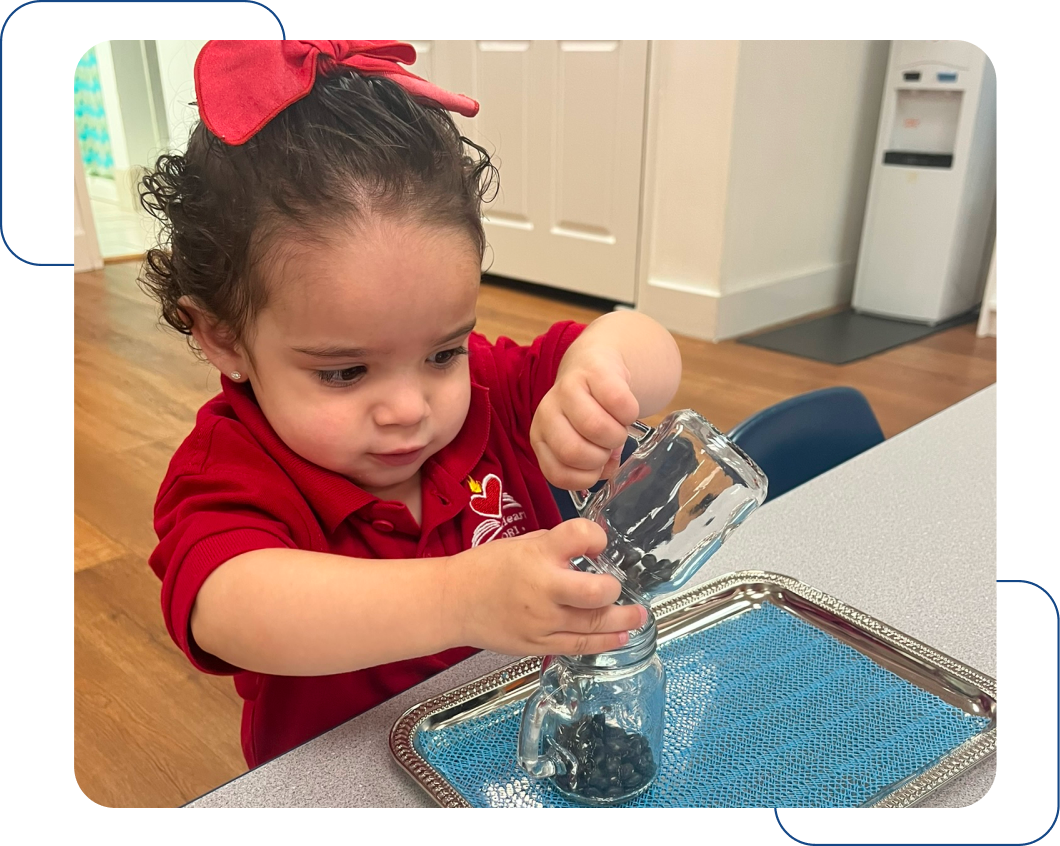
Pour & transfer: Let toddlers pour water from a small pitcher into a glass at meals.
Food prep: Invite your child to peel a banana, slice strawberries with a wavy chopper, or spread hummus on crackers.
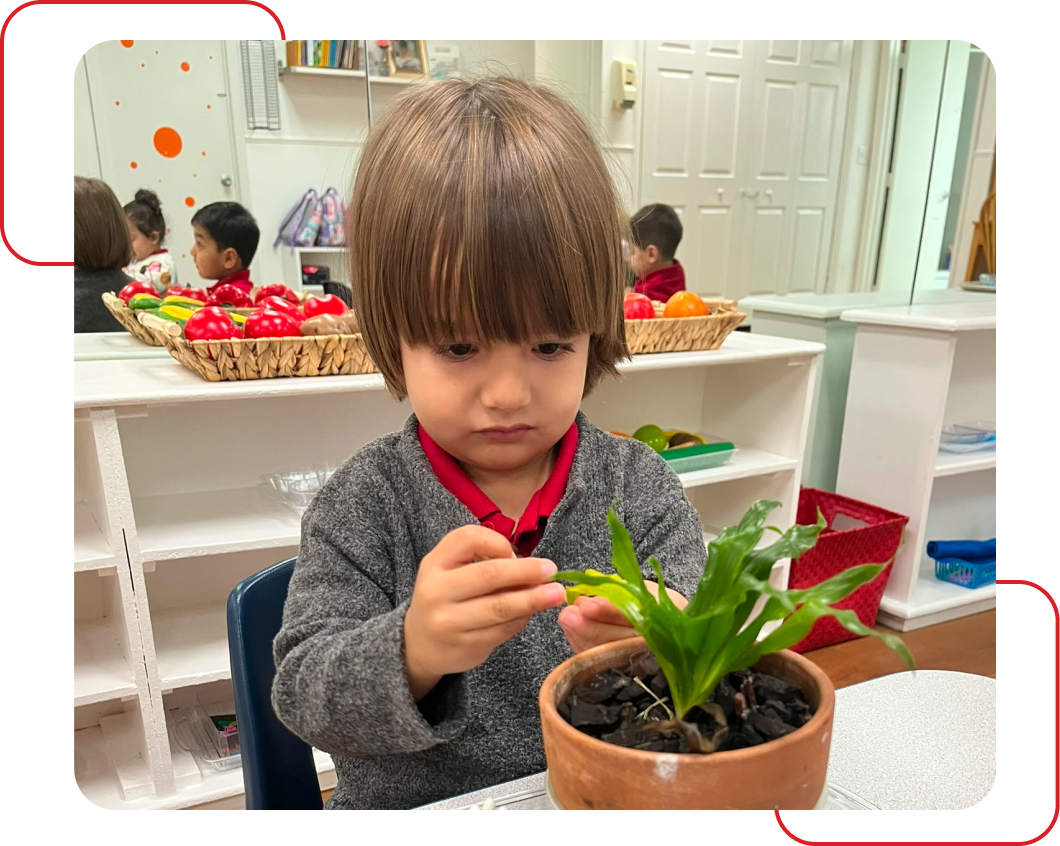
Care of environment: Show how to wipe a spill, water plants, and return materials to their place—then step back and allow repetition.
Nurture Language Every Day
Narrate routines: “I’m zipping your coat. Now we’re ready for the cooler air.”
Offer rich vocabulary: Name real objects—“carnation,” “measuring tape”—rather than generic labels.
Read together daily: Choose realistic books with clear images and simple story lines; allow your child to turn the pages.
Invite Early Math & Sensorial Exploration
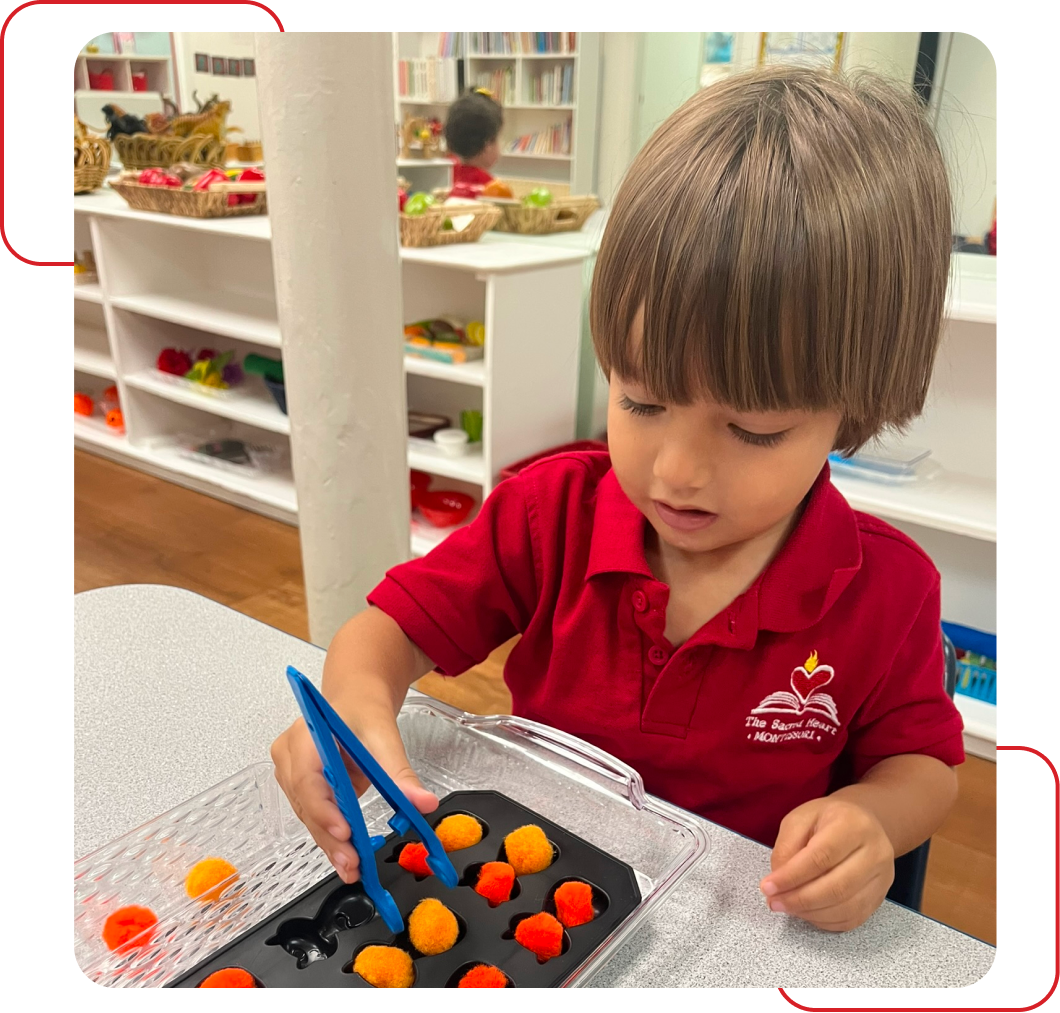
Sorting baskets: Provide buttons or shells to group by size, color, or texture.
Counting in context: Count stairs as you climb, apples as you bag them, and socks as you match pairs.
DIY sensorial trays: Fill shallow bins with sand, rice, or beans; supply scoops, funnels, and measuring cups for tactile play.
Model Grace & Courtesy
Use polite language first: “May I have the spoon?” instead of demanding it back.
Wait turns: Demonstrate patience during conversation and play; children imitate what they observe.
Acknowledge feelings: “I see you’re upset the block tower fell. Let’s rebuild together.” This validates emotion and guides problem‑solving.
Rotate Materials Weekly
Keep engagement high and clutter low by swapping a few toys each week. Follow your child’s current interests when choosing what to display next.
Observe, Then Adjust
Spend five quiet minutes watching how your child uses the space. If shoes pile up by the door, add a low bench or basket. Small tweaks make independence easier.
Recommended Home Materials
Low shelf (IKEA TROFAST or simple wooden bookcase)
Step stool for kitchen and bathroom sinks
Child‑sized cleaning kit—mini broom, dustpan, and microfiber cloth
Practical Life tray: small pitcher, glass, sponge
Art caddy: crayons, safety scissors, glue stick, paper