
Discover Montessori Education & Why it Works
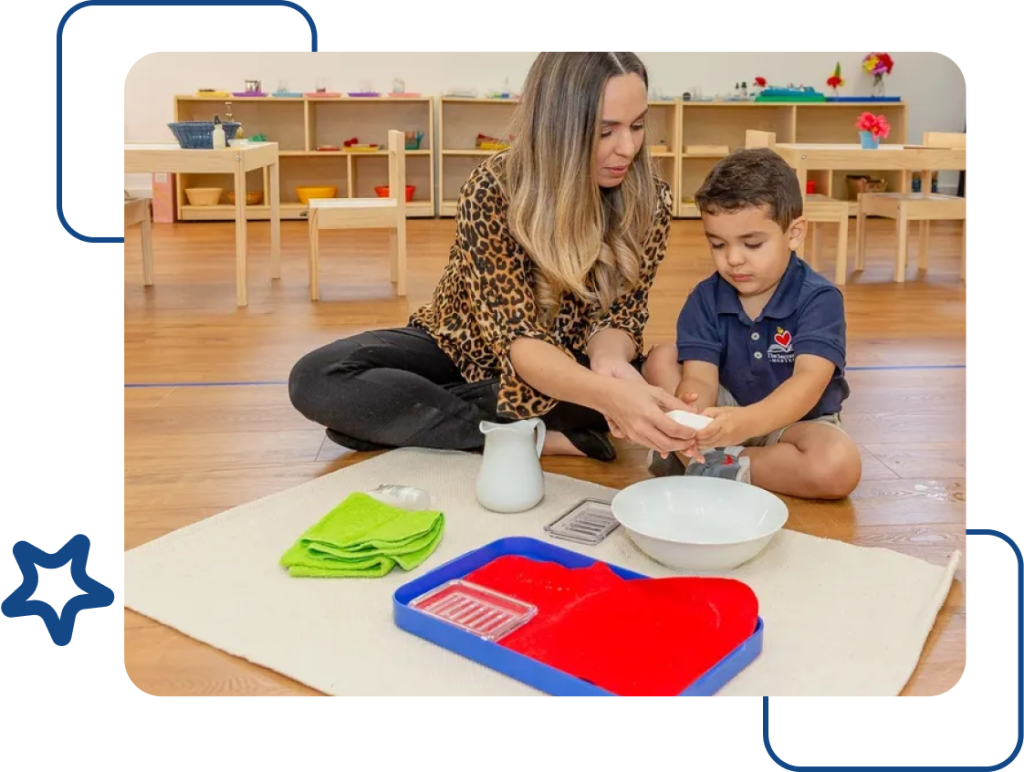
Montessori education is a child‑led, hands‑on approach that empowers children to explore at their own pace. Classrooms mix ages, encourage independence, and use scientifically designed materials that spark curiosity and concentration. The Montessori helps kids:
- Build Confidence
- Problem-Solving Skills
- Lifelong Love of Learning
Why Choose Montessori Education?
Montessori blends the structure parents expect with the freedom children need.
Education
Primary focused on childcare, playtime, and basic socialization
Teacher-led instruction with a set curriculum
- Child-led, self-direct learning
- Self-paced learning
- Emphasis on discovery
Less structured learning, often play-based activities with minimal educational focus
Typically follows a pre-set curriculum focused on ABCs, numbers, and social skills
- Montessori certified materials
- Focus on practical life skills
- Hands-on learning
All children follow the same schedule for learning activities
All children follow the same schedule for learning activities
- Children move through lessons at their own speed
Same-age groups follow a standard academic structure
Same-age groups follow a standard academic structure
- Mixed-age classrooms encourage peer learning
Traditional play areas with toys, books, and group activities
Traditional classrooms with desks, worksheets, and teacher-driven activities
- Prepared environment with Montessori materials designed for self-correction, exploration, and discovery
Daycare
Philosophy & Teaching
Primary focused on childcare, playtime, and basic socialization
Curriculum
Less structured learning, often play-based activities with minimal educational focus
Pacing
All children follow the same schedule for learning activities
Classroom Structure
Same-age groups follow a standard academic structure
Environment
Traditional play areas with toys, books, and group activities
Preschool
Philosophy & Teaching
Teacher-led instruction with a set curriculum
Curriculum
Typically follows a pre-set curriculum focused on ABCs, numbers, and social skills
Pacing
All children follow the same schedule for learning activities
Classroom Structure
Same-age groups follow a standard academic structure
Environment
Traditional classrooms with desks, worksheets, and teacher-driven activities
Montessori
Education
Philosophy & Teaching
- Child-led, self-direct learning
- Self-paced learning
- Emphasis on discovery
Curriculum
- Montessori certified materials
- Focus on practical life skills
- Hands-on learning
Pacing
- Children move through lessons at their own speed
Classroom Structure
- Mixed-age classrooms encourage peer learning
Environment
- Prepared environment with Montessori materials designed for self-correction, exploration, and discovery
Why Montessori Works
- Hands engage the mind. Concrete materials let children grasp abstract ideas (literally) before moving to pencil‑and‑paper.
- Choice builds motivation. When students select their own work, they stay focused longer and take pride in mastery.
- Mixed‑age mentoring. Older children reinforce knowledge by coaching younger peers, while younger ones see attainable next steps.
- Uninterrupted work cycles. Extended periods (2–3 hours) let kids dig deep into tasks, fostering concentration and resilience.
Curriculum in Action
-
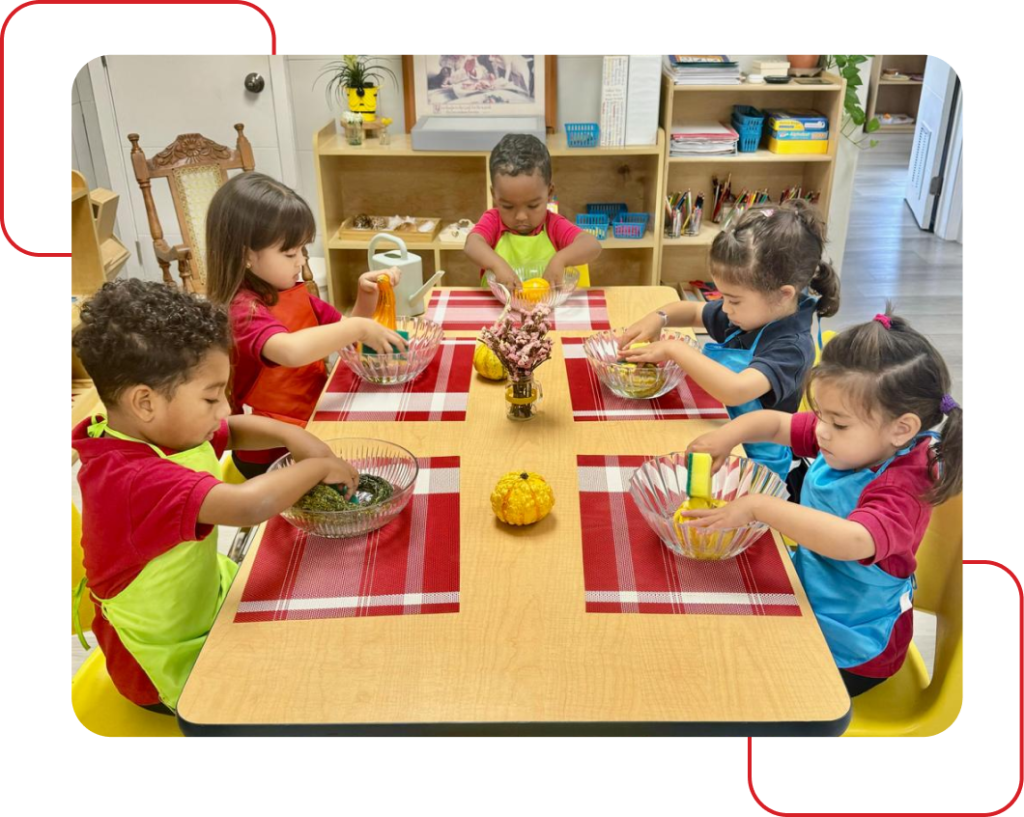
Practical Life
Students practice pouring, buttoning, food prep—real‑world tasks that refine motor skills and build independence. -
Sensorial
Materials isolate the senses (size, color, texture, sound, taste) so children sharpen perception and language. -
Mathematics
From golden beads to stamp games, children transition from counting to operations through tactile exploration. -
Language
Phonetic awareness, Sandpaper letters, moveable alphabets, and rich storytelling lay the groundwork for fluent reading and writing. -
Cultural Studies
Geography puzzles, science experiments, art and music open the world beyond the classroom, nurturing global citizenship.
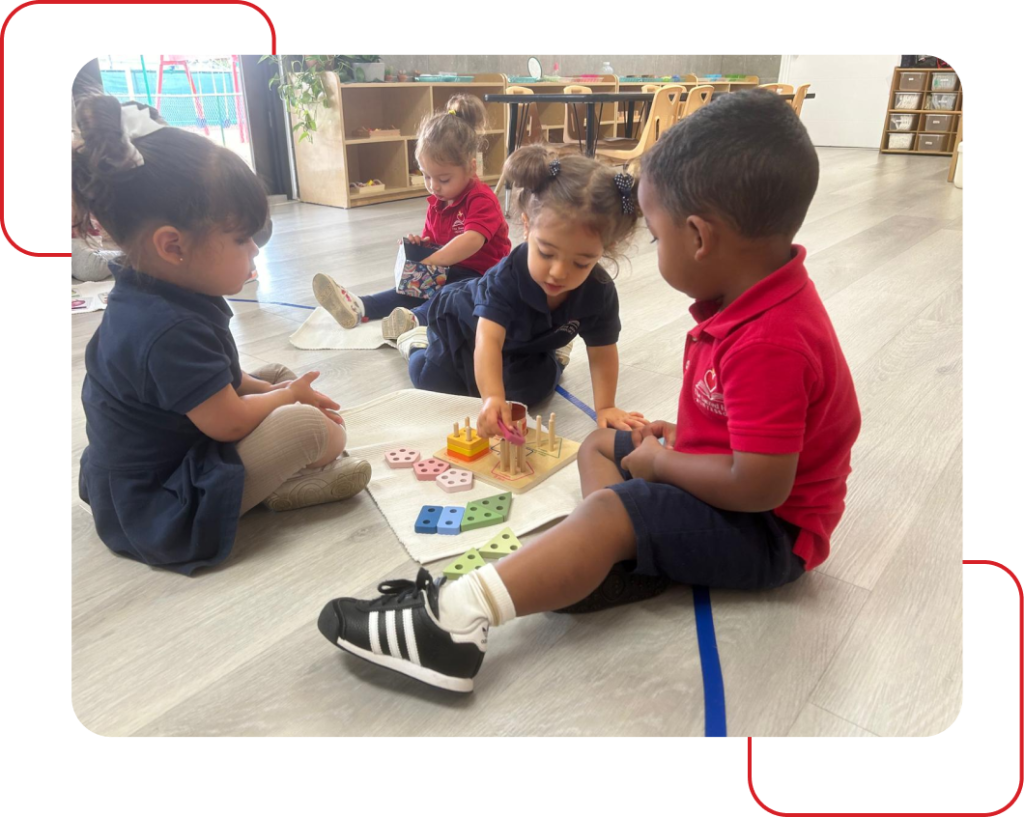
Each area interconnects, allowing a child passionate about dinosaurs, for example, to read about them, map their habitats, and measure their bones - all in one morning.